
How To Find The Perfect Accessibility Friendly Holiday Property
Planning a holiday should feel exciting, not overwhelming. For travellers with access needs, the key to a relaxing break is finding accommodation that is genuinely wheelchair friendly and set up for your day to day realities, not just a tick box list of features.
This guide walks you through each step of the process. From identifying what you really need, to checking whether a property is suitable and making sure the local area works for you, it is designed to help you book with confidence and avoid unpleasant surprises when you arrive.

Start With Thorough Research
Begin by exploring websites that specialise in wheelchair friendly and accessible holidays, as well as larger booking platforms that offer accessibility filters. Niche platforms, social media groups, and community recommendations often highlight properties that do not appear high up in standard search engine results.
When browsing any site, take time to read reviews from other guests who share similar needs. Their comments about access, layout, equipment and staff attitudes are often much more revealing than the main property description. Look for reviews that mention real life experiences, such as how easy transfers were, how practical the parking was, or whether there was enough space to move around in a wheelchair.
Remember that not every suitable property has its own website or a polished online presence. Some owners advertise only on social media or through specialist groups. A little extra digging can uncover some excellent hidden gems.
Identify Your Essential Accessibility Features
Before you fall in love with a particular cottage or apartment, it helps to be clear about what you actually need. Make a list of features that are essential for safety and comfort and a second list of things that are simply nice to have if possible.
Your essential list might include:
- Step free or ramped access from parking to the main entrance
- Enough space to manoeuvre a wheelchair in key rooms such as the bedroom, bathroom and living area
- A wheel in shower or suitable shower chair and grab rails
- Profiling beds, hoists or riser recliner chairs
- Space under the bed for hoist legs if you travel with your own equipment
When searching online, keyword phrases like “wheelchair friendly holidays in England with profiling beds” can help, but they will not always show every suitable option. Owners may use different language, may not list every feature, or may not appear in search engines at all.
If you cannot find a property with all the equipment you need, it may be possible to hire items such as profiling beds, hoists or shower chairs through a third party company that delivers across the UK. Always speak to the property owner first to check there is enough space for additional equipment and that floors or ceilings are suitable where needed.
How To Make Sure A Property Is Genuinely Suitable
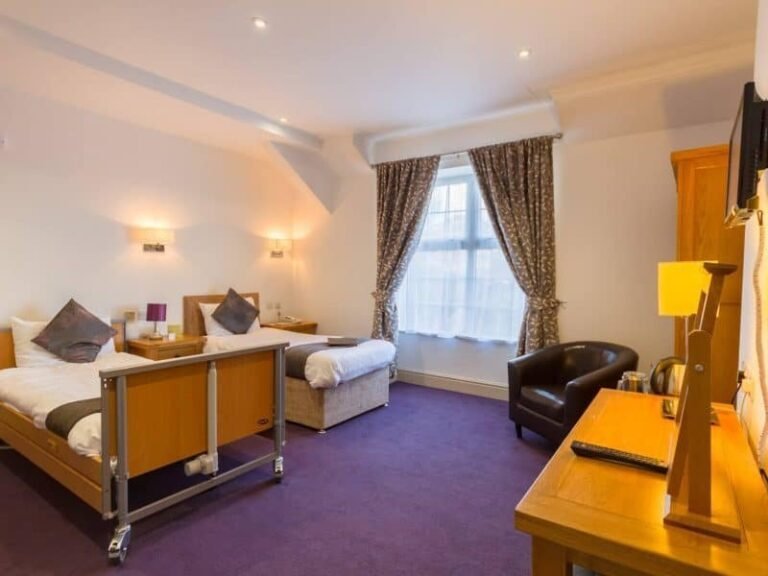
Many wheelchair friendly holiday homes now offer extensive photo galleries, videos or even 360 degree tours. Some owners also provide an accessibility statement. This is invaluable, as it should clearly set out details such as door widths, bed heights, bathroom layout, step heights and routes to outdoor spaces.
Photos alone can sometimes be misleading. A room that looks spacious on screen might feel cramped in reality. If you are unsure, contact the owner or agent and ask specific, practical questions such as:
- What are the exact door widths for the entrance, bedroom and bathroom
- Is there step free access from parking through to the main living area
- What is the bed height and is there clearance underneath for a hoist
- Is the shower level access and are there fixed grab rails or a shower chair
- Are there any slopes, thresholds or narrow corridors that might cause problems
Most owners would rather answer detailed questions than risk a guest arriving and finding the property unsuitable. Do not be afraid to ask for extra photos or a short video walk through of key areas if you need extra reassurance.
Research The Local Area
Finding the right property is only half the picture. You also want to know that the local area works for you. There is nothing more frustrating than arriving at a beautifully set up cottage, only to discover that nearby attractions, cafes or seafronts are not wheelchair friendly.
Before you book, search for accessibility information about the town or region you are considering. Websites such as DisabilityDays, AccessAble and Euan’s Guide provide detailed accessibility information and reviews for locations across the UK.
Helpful things to look for include:
- Accessible attractions, museums and visitor centres
- Wheelchair friendly beaches, promenades and coastal paths
- Accessible toilets and Changing Places facilities
- Cafes, pubs and restaurants with step free access and suitable seating
- Accessible public transport or reliable taxi services
If you have specific places in mind, check their official websites or contact them directly for up to date accessibility information. A quick email or phone call can often save a lot of stress later.
Use The Power Of Facebook And Online Communities
Official websites and brochures are helpful, but nothing beats honest, first hand feedback from people who have already visited. Facebook groups and online communities can be an excellent source of real life information about wheelchair friendly accommodation and days out.
You can join locality based groups in the area you are thinking of visiting and ask general questions about parking, pavements and hills. Even more useful are dedicated accessibility and holiday groups where members share recommendations, photos and reviews with an access focus.
Examples include:
- Accessible, Adapted or Disabled Holiday Lets, Places to Visit & Days Out UK
- Accessible Holidays and Day Trips
- Holiday home for the disabled and their families
These groups often include both guests and property owners. That makes them a great place to ask questions, discover new properties and learn from other people’s experiences before you commit to a booking.
Have A Back Up Plan
New wheelchair friendly properties are appearing all the time, but there are still areas of the UK with limited accessible accommodation. Having a back up plan helps reduce pressure and gives you more chance of finding somewhere that works.
Consider:
- Setting a realistic radius from your preferred destination, for example up to 30 or 60 minutes away
- Choosing two or three regions you would be happy to visit so you are not tied to a single town
- Deciding which pieces of equipment are absolutely non negotiable and which you might be able to manage without
For example, you might accept a property with a bath and a ceiling hoist instead of a full wheel in shower, or manage without a riser recliner chair if there is a stand aid available and everything else is ideal. The balance will look different for each person, but being clear about your own priorities makes decisions easier.
Final Checks Before You Book
Once you think you have found the right place, take a moment to bring everything together. A simple checklist can be useful:
- Have you confirmed all essential accessibility requirements with the owner in writing
- Do you have clear information about parking and the route into the property
- Is the bathroom layout and equipment suitable for your needs
- Is there enough space to move around comfortably with a wheelchair or mobility equipment
- Have you identified at least a few wheelchair friendly things to do nearby
- If you plan to hire equipment, has the owner confirmed that delivery, set up and storage are practical
Keeping email confirmations, accessibility statements and key measurements together in one folder or document makes it easier to refer back to them once you arrive.
Conclusion
Finding the perfect wheelchair friendly holiday accommodation takes a little more planning, but it is worth the effort. By clearly identifying your needs, asking detailed questions, researching the local area and using the knowledge of online communities, you can choose a place where you feel safe, comfortable and able to relax.
If you have any questions about anything raised in this article or would like some personalised advice, please send us a message via our Contact Us page. We are always happy to help you find the right accommodation for your next break.
Parts of this article were written with the assistance of AI to help improve clarity, structure and readability. All content has been reviewed, edited and approved by Disability Destinations before publication.